On the noosphere
February 6, 2026
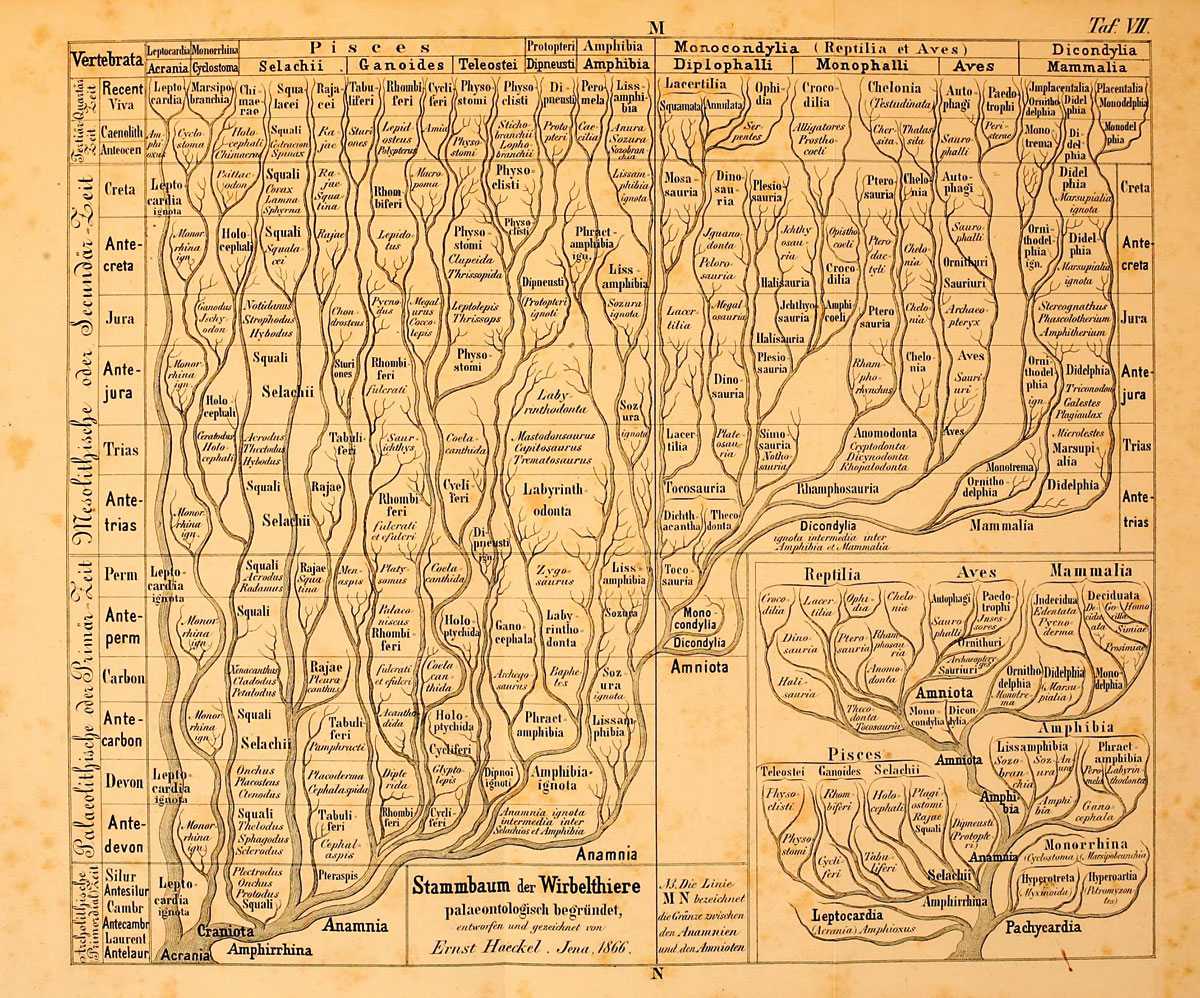
I recently read The Phenomenon of Man by Pierre Teilhard de Chardin, an early 20th century Jesuit priest, geologist, and paleontologist, who was a key contributor in the discovery and research of the "Peking Man" fossils, a collection of fossils mostly dating to around 700,000 years ago from the early human relative Homo erectus. The book introduces many concepts from Teilhard's personal philosophy as a student of the natural sciences, and in particular it champions the concept of orthogenesis, the idea that biological evolution has a direction or purpose[1].
While orthogensis is an interesting idea, it's not the primary reason I chose to write this post. In fact, I really didn't enjoy reading the book. It uses overly-complicated language to describe simple ideas, and I struggled to get through many sections of the book. The book was written in Teilhard's native French, so perhaps the difficulty is at least partially attributable to the specific English translation I read. Regardless, one idea from the book sticks with me, and I find myself thinking about it more with time. The Phenomenon of Man is most well-known for introducing the concept of the "noosphere" (pronounced NOH-uh-sfeer), and that's what I want to discuss here. A lot has been said on the topic and as a result my explanation might not resemble others', but my goal here is only to describe it as I understand it.
In geology and the earth sciences, the world is partitioned into many spherical zones, often containing the suffix "sphere". There's the atmosphere, the hydrosphere — oceans, lakes, clouds, etc. —, and the geosphere — all the solid parts of the earth. There's also the magnetosphere, the area surrounding earth which is dominated by its magnetic field. Due to its interaction with the charged particles of the solar wind, the magnetosphere is not very sphere-shaped at all. It is often described as tear-drop-shaped or bullet-shaped, where the bullet shape faces away from the sun.
Within many of the earth's spheres there are also subpartitions. In geology there's the crust, mantle, and core, as well as the lithosphere and asthenosphere. The atmosphere is broken down into the troposphere, stratosphere, mesosphere, thermosphere, and exosphere.
Perhaps the most consequential sphere we learn about in school is the biosphere. It's the world of living things, and it exists primarily on the surface of the lithosphere and in the hydrosphere. But it also takes up residence in the atmosphere in the form of flying animals, spores, pollen, and all manner of microorganisms. And there's speculation due to the existence of extremophile organisms, and specifically lithophiles (rock-eating organisms), that the biosphere may reach deep into the lithosphere or even below it. If there's any truth to one of the many hypotheses that life on earth has extraterrestial origins, then depending on the way you define it the biosphere would be similar to the magnetosphere in that it is not spherical in nature.
Many of the earth's spheres rely on the existence of other spheres. For example, the earth's atmosphere would likely resemble Mars's relatively thin and simple atmosphere if not for the magnetosphere, shielding it from the constant barrage of solar wind. And without the atmosphere and its greenhouse effect, the hydrosphere would also much more closely resemble Mars's — just ice. Similarly, the biosphere relies on each of the other spheres and may not exist at all without them.
This brings us to the noosphere. The noosphere completely relies on the biosphere, and could be considered a subpartition of the biosphere. But as I will return to later, the level of activity and the rate of change within the noosphere make it particularly unique. Similar to the magnetosphere, the noosphere has little to no mass. And the noosphere also leaves behind artifacts pointing to its existence, similar to the way the biosphere does in the form of fossils.
So what is the noosphere? In short, it's the realm of minds. And minds are unique to only some regions of the biosphere, or at the very least there is a spectrum of the luminosity of minds, and many or most organisms posess an infinitesimally low luminosity of mind. I don't mean to create confusion by saying this or to suggest this is what Teilhard believes. I'm simply leaving room for the mystery of consciousness, and specifically for hypotheses that predict consciousness could exist in very simple forms of life or even non-living things. Also, since so much has been said about the nature and qualities of minds, I want to be clear that when I use the term mind I simply mean a specific instance of consciousness. Of course, if consciousness exists in non-living things then the noosphere would extend outside of the biosphere, but for simplicity let's assume it only exists in some forms of life. Using this definition, one could say that an alien world covered in a thick slime of prokaryotic organisms has a biosphere but not a noosphere.
Teilhard argues that the noosphere arises through the process of "cerebralization" in animals, or the emergence of and increasing size and complexity of nervous systems. Recall that Teilhard supported the idea of orthogenesis, so he believed that this cerebralization process and the emergence of the noosphere from the biosphere was part of the purpose of evolution. He argued that evolution goes through a process of "groping" and "pruning", where, as he argued was the case in early human evolution, it "tries out" many forms, like Neanderthals and Homo erectus, and then, once it has achieved its most capable form — humans in this example —, begins to multiply and spread out while the less optimal forms are pruned back from the tree of life.
In the case of animal species, he argues that the optimal form of a species will tend to develop a greater nervous sytem, social interactions, and eventually entire societies. He also argues that the process of groping and pruning is fractal. The process occurs at the level of the individual species, but also at the levels of the family, class, phylum, and kingdom. Within the insect class, ants and bees occupy the role of the most capable species. Among insects, they exhibit the most complex behaivors and social interactions, but as insects they are limited in ways which, according to Teilhard, make them ultimately less optimal than other groups of animals such as mammals. Whether or not they have minds is debatable.
Teilhard's ideas about cerebralization and orthogenesis are interesting but they're not crucial for understanding the noosphere. As I alluded to earlier, I think it's up for debate whether nervous systems are a key or unique ingredient of consciousness. For example, there's ongoing research into the communication methods of fungi via their mycorrhizal networks. Speculative as it is, some researchers argue that fungi actually send information through mycorrhiza in the form of language. So the key takeaway from Teilhard's work is not how or why the noosphere exists, but simply that it does exist.
And in the noosphere exist such things as language. Not just human language — also sperm whale, elephant, crow, and fungi language, if indeed these forms of communication can be considered language. There are also mating rituals, such as the elaborate displays of the birds of paradise, and perhaps Amazon river dolphins' tendency to lift balls of clay above the surface of the water. Then there are fads, obvious in the fashion and behaivors of humans, but also present in orcas, where in at least one region they have been observed wearing dead salmon on their heads. Finally, there are all manner of hunting and gathering techniques that vary within a given species's population. That said, it's up for debate whether any given one of these techniques exists "in the mind" or not, for perhaps some of them are somehow wired into a species's DNA.
I mentioned previously that the noosphere also leaves artifacts, just as the biosphere leaves behind fossils. Among the abundance of noospheric fossils, books are perhaps the most notable. But there are also broken shells throughout Southeast Asia, where crab-eating macaques use rocks as tools to hammer open oysters, clams, and other aquatic food sources. The types of stones and techniques used by these monkeys varies from group to group. There are also the carcasses of great white sharks off the coast of South Africa, fully intact with the exception of a single organ, where local orcas hunt them solely for their livers. These carcasses are more indicative of orcas' cultural evolution than their genetic evolution.
What's notable about the noosphere is the diversity, rapid rate of evolution, and magnitude of the activity it contains. All of the earth's spheres have some level of activity. The poles of the magnetosphere, for example, are constantly wondering and occasionally flip. In the geosphere, the dynamic processes of plate tectonics, volcanism, and mantle convection are constantly unfolding. And in the biosphere an unfathomable number of constantly evolving chemical processes are underway at all times. But in the noosphere there is thought, feeling, and the ever-changing tides of culture, as well as all the activity that takes place inside the artifacts of the noosphere. This includes every strand of fabric woven in every mechanized loom, every operation in every computer processor, and every unit of thermal energy converted to electricity in every nuclear power plant.
At this point it may have occurred to you that the noosphere is perhaps simply the world of memes. But this does not make the noosphere any less significant. David Deutsch, in his book The Beginning of Infinity, writes that, "...the frequently cited metaphor of the history of life on Earth, in which human civilization occupies only the final ‘second’ of the ‘day’ during which life has so far existed, is misleading. In reality, a substantial proportion of all evolution on our planet to date has occurred in human brains. And it has barely begun. The whole of biological evolution was but a preface to the main story of evolution, the evolution of memes." In other words, the rate of evolution in the noosphere outpaces the biosphere to such an extent that it makes all of biological evolution look insignificant in comparison. But, beyond the noosphere's extraordinary dynamism, there is a realm of possibilities with deeper implications.
Allow me to leave you with one final speculation: if there is even a kernel of truth to any of the various claims of extrasensory perception, including children who report verifiable memories of someone else's life, patients who perceive verifiable details in and around a hospital during a near death experience, children said to demonstrate "mindsight", and perennial assertions of telepathy[2], then at the very least there may be one or more undiscovered organs through which animals transmit or receive information. Or perhaps the noosphere is much more than the realm of memes, which spread through cultural replication and are fully reliant on the sense organs of biology. The noosphere could constitute a genuine ecology of minds, able to interact directly with one another or world in general, and which are perhaps somehow more than just specific instances of consciousness constrained to their individual biological hardware.
Notes:
As a Jesuit, Teilhard received sharp criticism from the Catholic church for his unorthodox ideas, including his support for the theory of evolution. That said, it's not difficult to understand why a Christian who accepts the theory of evolution would support the idea of orthogenesis. In short, Teilhard viewed evolution as a process set in motion by God to create humankind. Teilhard's ideas have received praise from many high-ranking Catholic clery in more recent years, including multiple popes.
Telepathy claims: